Source: The New Yorker Magazine
In August, 2021, a new, shirtless figure appeared on Instagram and TikTok. With a great shaggy beard and muscles the approximate size and color of ripe pumpkins, he was part cowboy, part Conan the Barbarian. “I’m Brian Johnson,” he said in his third Instagram video. “My family and tribe call me Liver King.” He is the owner of Ancestral Supplements—which sells desiccated organ meat in capsule form—and a walking marketing campaign.
Within eight months, the Liver King had amassed a million and a half followers on Instagram and nearly three million on TikTok. He was mellow at first, but he embraced the new persona, growing crasser and more meme-worthy, and less clothed. (On a podcast in March, 2022, he said that the Liver King “broke out of his cage, and he fucking ate Brian Johnson.”) Most of his videos centered on eating meat, lifting heavy stuff, and doing punishing, unorthodox workouts. His body, he said, was all natural, the product not of steroids but of exercise and eating animals.
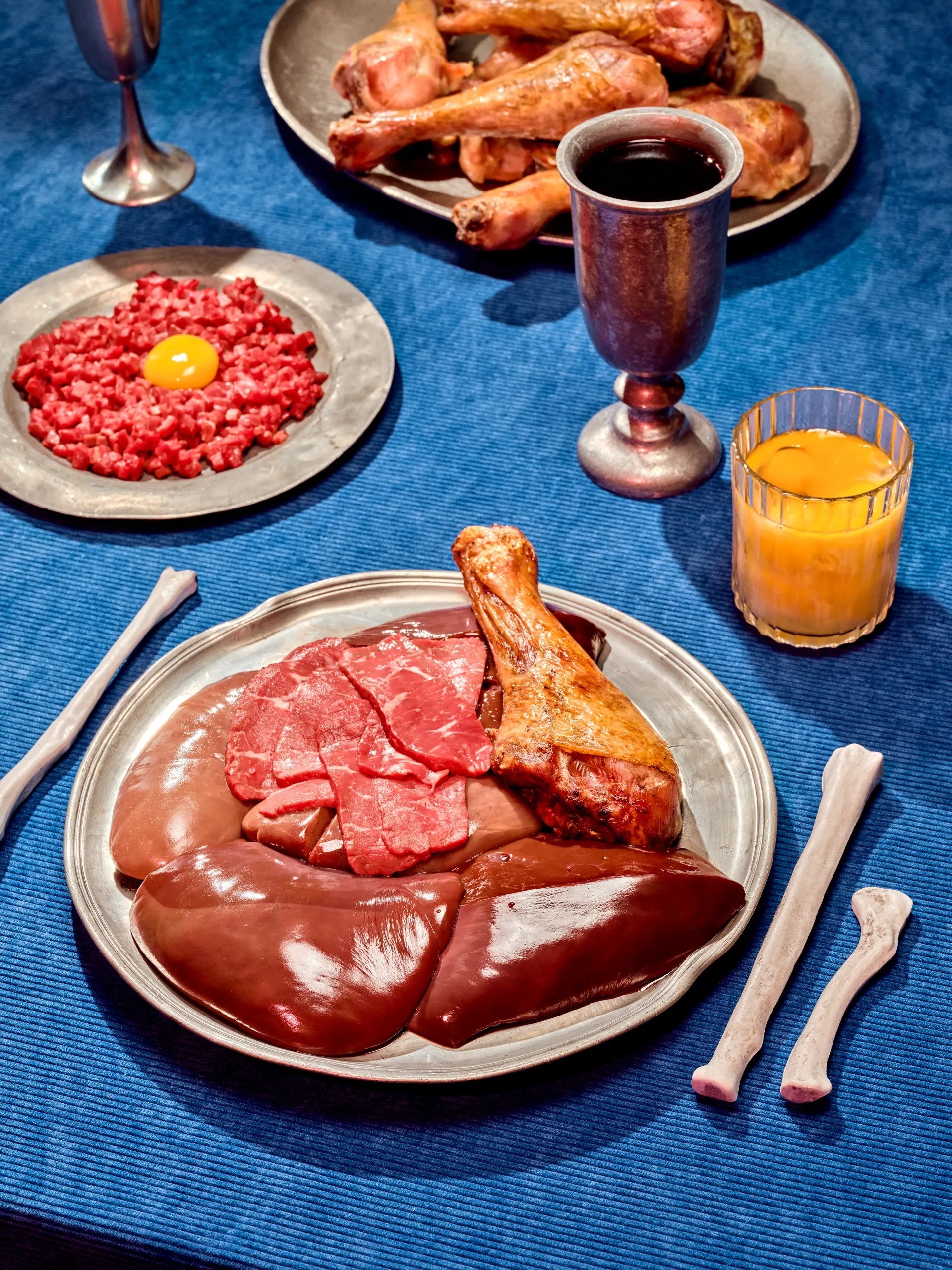
The Liver King’s premise, a familiar one by now, is that we are mismatched with the modern world and that many of our problems can be solved by reconnecting with long-lost ways. He insists on nine ancestral tenets. These include reasonable suggestions like “sleep,” “move,” and “bond,” but, as he once explained, “if I tell you all nine, you don’t remember anything.” Instead, he boiled his recommendations down to one: “I say, ‘Eat liver, because liver is king.’ ” The best-selling, stand-alone product on ancestralsupplements.com is Grassfed Beef Liver.
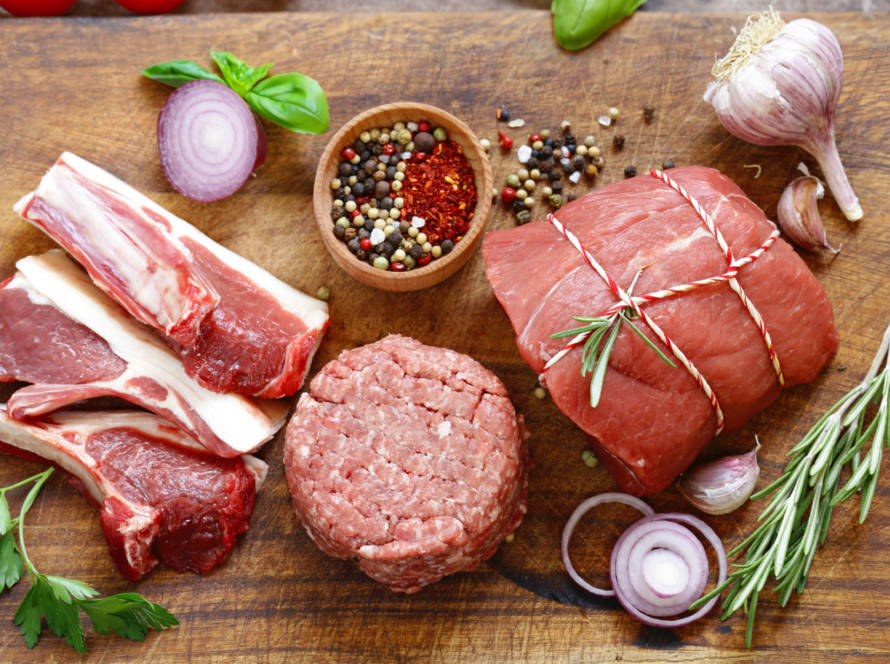
The craze for eating the way our ancestors did is nothing new; it has been more than two decades since the exercise physiologist Loren Cordain published “The Paleo Diet: Lose Weight and Get Healthy by Eating the Food You Were Designed to Eat” (2001), helping launch a billion-dollar industry. But the Liver King, along with a crew of other “meatfluencers,” has pushed paleo to an extreme of carnivory. They maintain that humans evolved to kill animals similar in size and constitution to domesticated cattle, to devour their organs (often raw), and to eat vegetables only in the most desperate of circumstances.
“Forget the leaves and fibrous tubers, we’re going hunting!” Paul Saladino (IG followers: 1.6M) writes in “The Carnivore Code,” the closest thing the new movement has to a manifesto. He asserts that “this approach appears to be exactly what our ancestors did.” (Saladino co-owns a supplement company, Heart & Soil, with the Liver King.) According to “The Carnivore Code,” plants are poison—they don’t want to be eaten, and have, as a result, evolved defensive chemicals designed to disrupt your digestion. Likewise, in “The Carnivore Diet,” Shawn Baker (IG followers: 319K) says that the most efficient way proto-humans got protein and calories was “to take down a big, fatty, energy-filled megafaunal animal.” They may have nibbled on the occasional fruit or nut, he admits, but the time and energy needed to get the same payoff would have been “greater by at least an order of magnitude.” The Liver King himself came up with the pithiest tagline: “Why eat vegetables when you can eat testicles?”
The notion of the meat-loving ancestor has a history. In the nineteen-fifties, the anatomist Raymond Dart, famous for discovering the first authentic fossil of an early African hominin, advanced what became known as the “killer ape” theory. Hunting, Dart thought, made us human. Our furry forebears climbed down from the trees to gorge on “the more attractive fleshy food that lay in the vast savannahs of the southern plains,” he wrote in the book “Adventures with the Missing Link” (1959). Elsewhere, he described the earliest hominins as “confirmed killers: carnivorous creatures that seized their quarries by violence, battered them to death, tore apart their broken bodies, dismembered them limb from limb, slaking their ravenous thirst with the hot blood of victims and greedily devouring livid writhing flesh.”
The killer-ape theory seeped into the mainstream. In 1955, Dart, then based at the University of the Witwatersrand, met the playwright Robert Ardrey, who was in South Africa for a reporting trip. Like a convert seeing the holy truth, Ardrey came away transformed. He was convinced that “the predatory transition” not only made us human but also explained what he described as “man’s bloody history, his eternal aggression, his irrational, self-destroying inexorable pursuit of death for death’s sake.” Ardrey was inspired to write the “Nature of Man” series, a set of books about human nature and evolution, published between 1961 and 1976. Time later named “African Genesis,” the first in the series, the most notable nonfiction book of the sixties. It was cited as an influence on Stanley Kubrick’s film “2001: A Space Odyssey” (1968), whose opening sequence showed primate violence as a turning point in the development of our species.
As Ardrey and Kubrick popularized the killer ape, anthropologists started to review the evidence. In 1966, at a meeting remembered in anthropological lore as the beginning of hunter-gatherer studies, seventy-five experts assembled in Chicago to synthesize our knowledge about foraging peoples. More than ninety-nine per cent of human history was spent without agriculture, the organizers figured, so it was worth documenting that way of life before it disappeared altogether. The symposium—and an associated volume that appeared two years later, both titled “Man the Hunter”—exemplified an obsession with hunting, meat-eating, and maleness. “Man” was meant to cover all humans; “hunter” was shorthand for anyone who subsisted on wild food. The book devoted an entire section to the role of hunting in human evolution. “Hunting is the master behavior pattern of the human species,” a chapter began. “It is the organizing activity which integrated the morphological, physiological, genetic, and intellectual aspects of the individual human organisms and of the population who compose our single species.”
The meeting also revealed problems with the meat-centric story. Dart had asserted that “all prehistoric men and the most primitive of living human beings are hunters, i.e., flesh eaters.” But contributors to “Man the Hunter” showed how one-sided this perspective was. The anthropologist Richard Lee reported that the !Kung, one of the so-called Bushman people of Southern Africa, got two-thirds of their calories from plants. Nor were they an exception. When he compared fifty-eight foraging societies from around the world, Lee found that half got the majority of their calories from plant foods; another eighteen relied mostly on fishing. Only eleven—less than a fifth—relied on hunting as their primary means of subsistence, and all but one were limited to either the highest or the lowest latitudes, far beyond our African homeland.
Since the publication of “Man the Hunter,” scientists have incorporated genomic as well as new archeological and paleontological methods into the study of diets from deep history. “The details differ and it’s easy to get lost in the weeds, but the overarching message from each is clear: we evolved as opportunistic omnivores,” Herman Pontzer, an evolutionary anthropologist at Duke University, writes in his recent book, “Burn.” It includes a takedown of paleo-style tropes, including carnivory. “Humans eat whatever’s available, which is almost always a mix of plants and animals (and honey).”